The best USB microphones range from simple desktop condensers to dynamic models with XLR connections for a later studio upgrade. Choose a microphone based on how you record, where it sits, and whether you need hands-on controls, multiple pickup patterns or a complete boom-arm kit.
Quick Top Products
SteelSeries Alias USB Mic
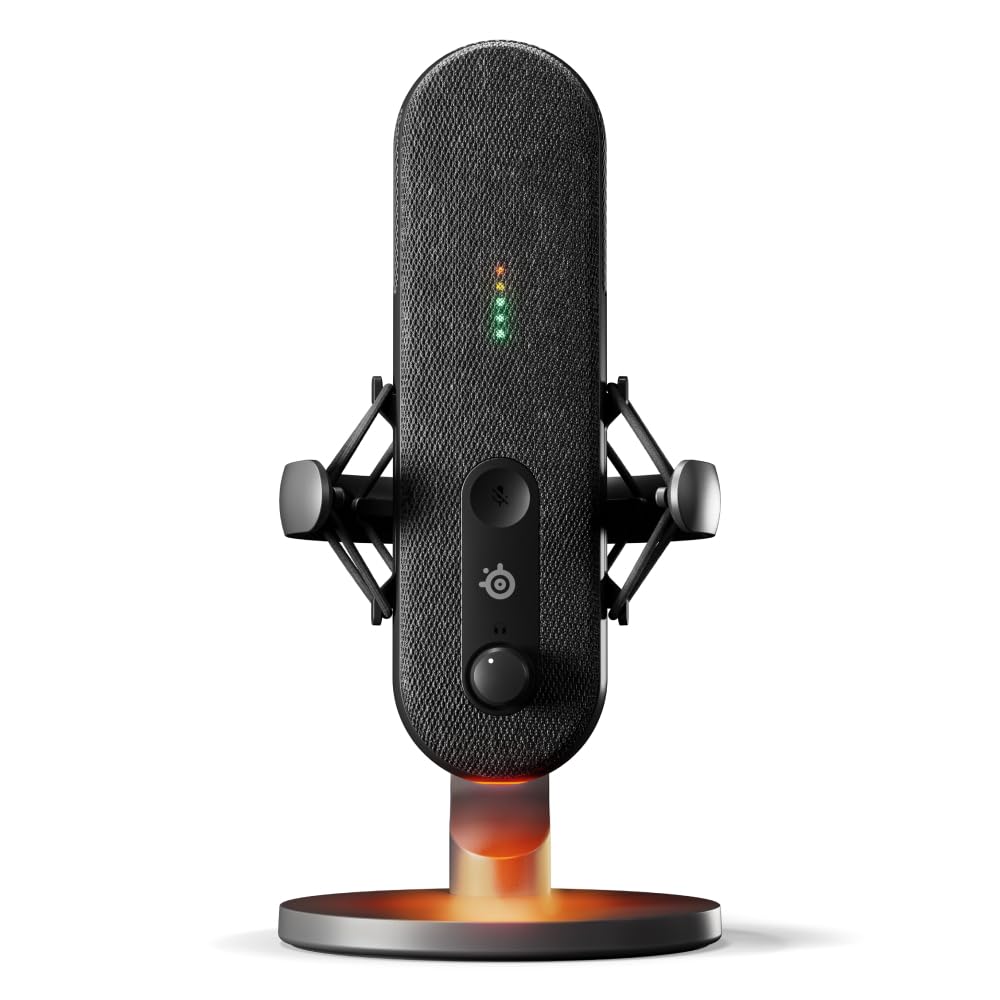
- USB mic for gaming, broadcasting and podcasting.
- LED lighting shows levels and mute status on the mic.
- Integrated shock mount reduces unwanted vibration.
Best For: Streamers who want on-mic level and mute indicators with included audio software.

Samson Q9U
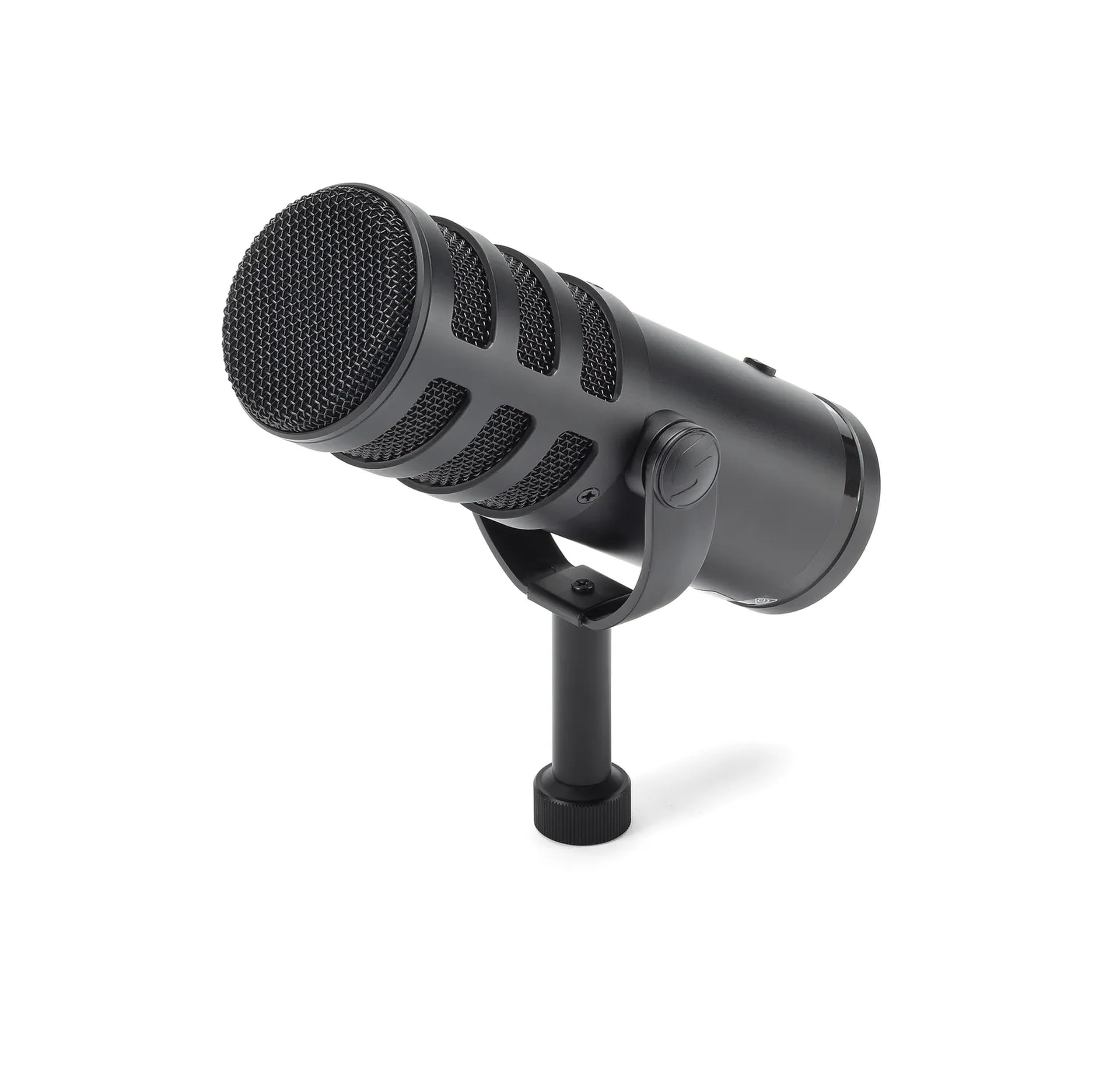
- Offers XLR analog output and USB-C connection.
- USB recording supports 24-bit/96kHz resolution.
- Includes zero-latency headphone monitoring and a mute switch.
Best For: Broadcasters who want USB-C recording now and XLR connectivity for a mixer or interface.
JLab Talk Pro
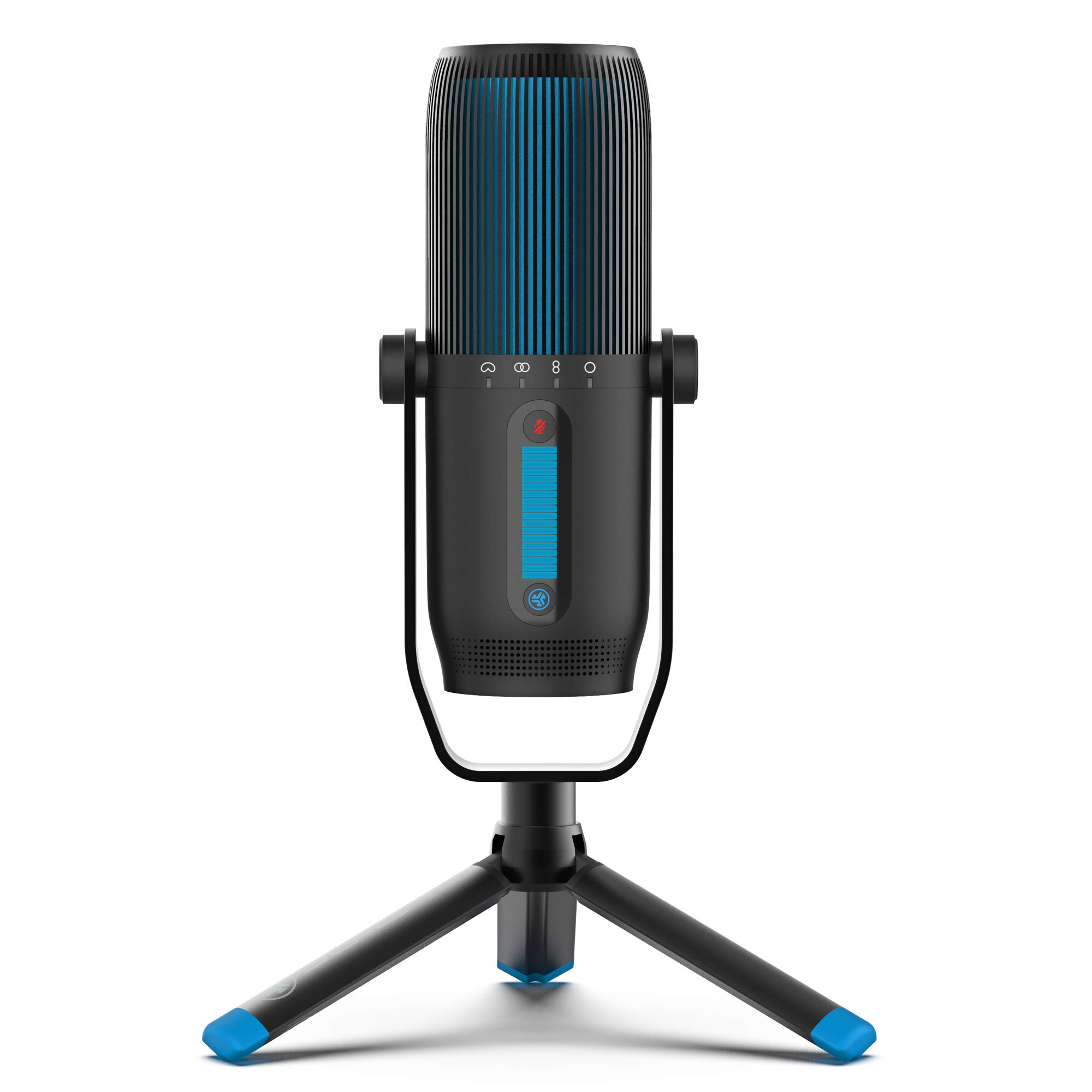
- Offers four directional pattern modes for podcasts, game streams, music, voice and ASMR.
- Supports 192kHz/24-bit recording resolution.
- Includes a 10-foot USB/USB-C cable.
Best For: Creators who record solo and group audio and want multiple pickup-pattern choices.
MAONO PD400X
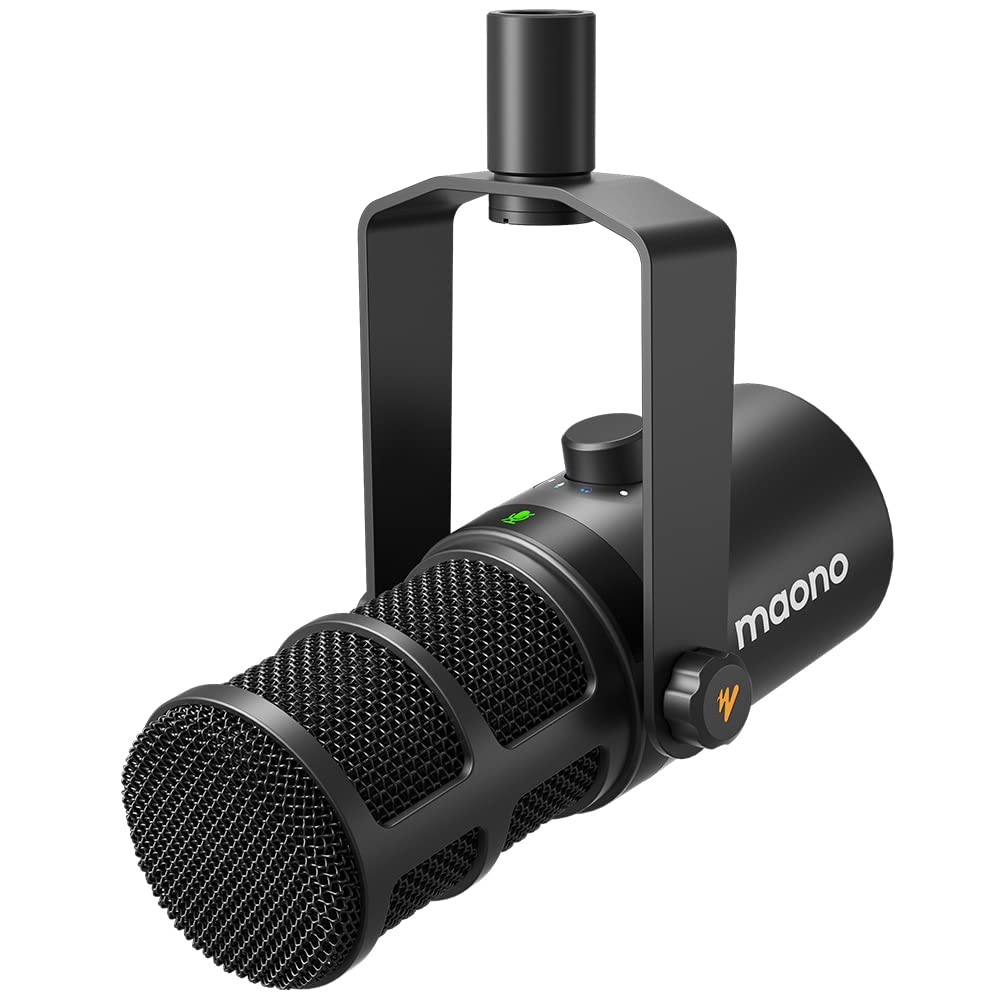
- Supports USB plug-and-play and XLR output.
- MAONO Link includes EQ, limiter and compressor adjustments.
- The digital knob controls gain, headphone volume and monitor mix.
Best For: Podcasters who want app-based sound adjustments and both USB and XLR connections.
MAONO PD200XS
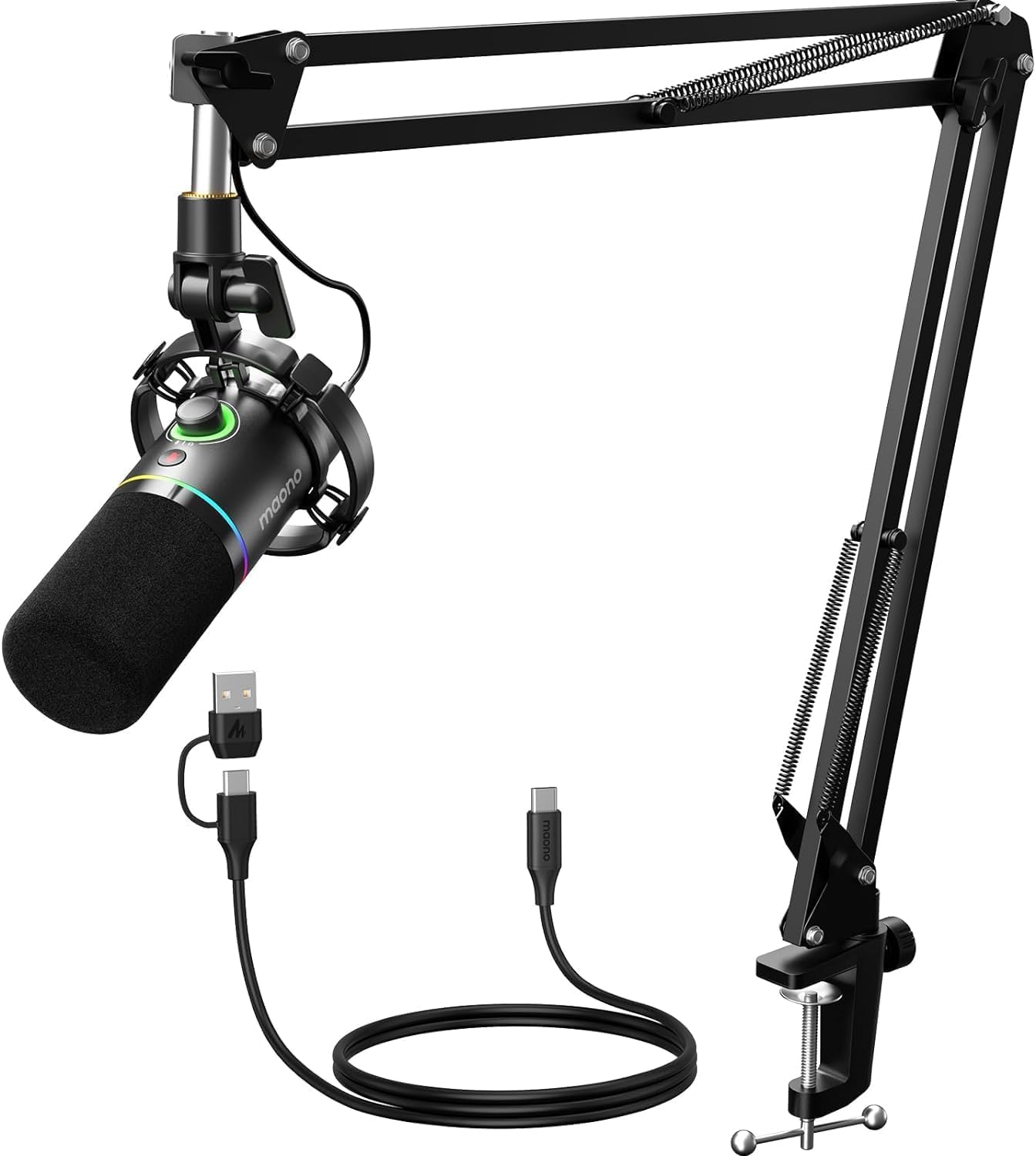
- Includes USB and XLR interfaces.
- USB software supports EQ, limiter and compressor adjustment.
- A boom arm and one-click mute key are included.
Best For: Streamers seeking USB/XLR flexibility, a bundled boom arm and on-device controls.
FIFINE T669
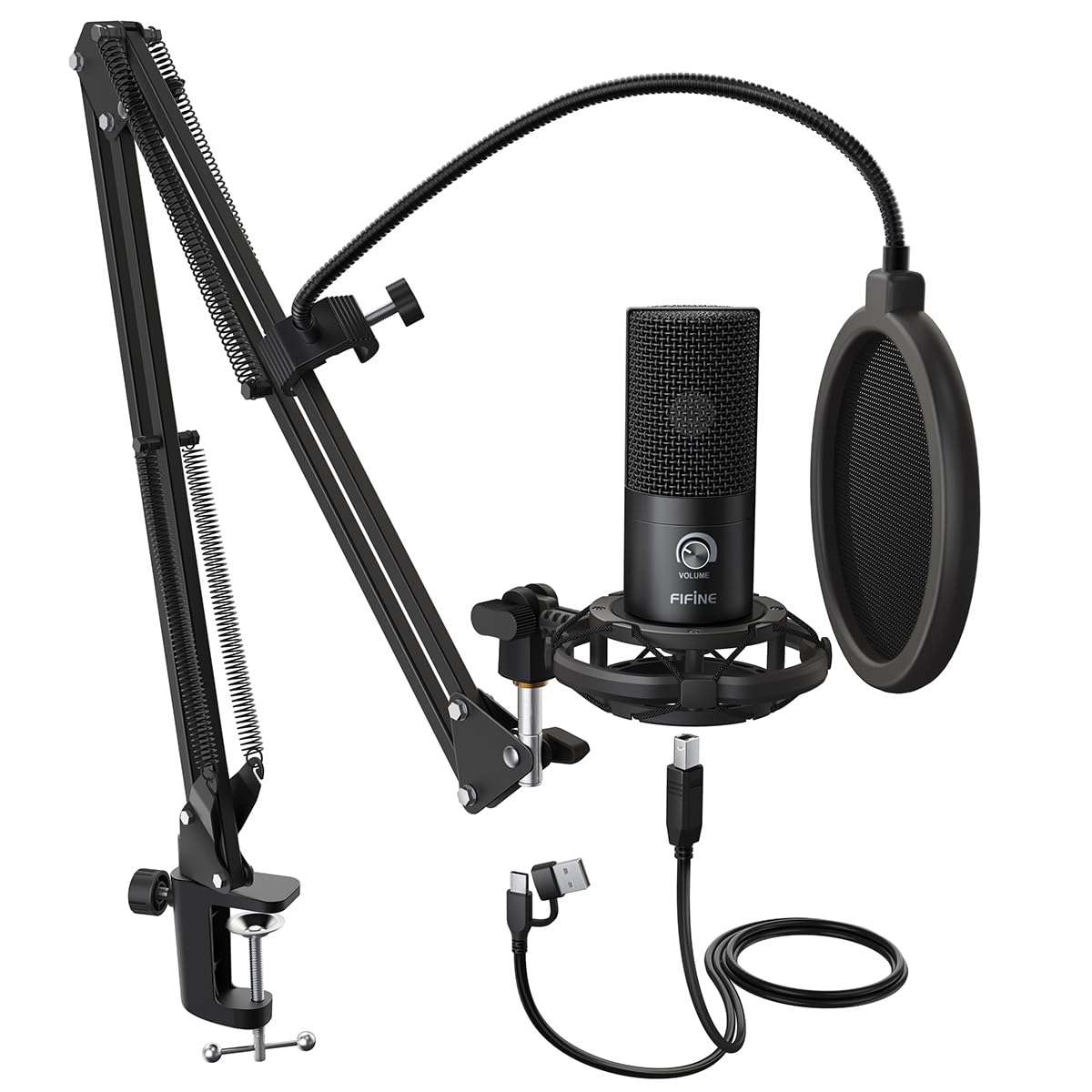
- USB plug-and-play connection works with PC and laptop.
- Cardioid condenser capsule captures audio from the front.
- Includes a steel scissor arm and double pop filter.
Best For: Home podcasters who want a condenser microphone and adjustable arm with core accessories.
JLab Talk
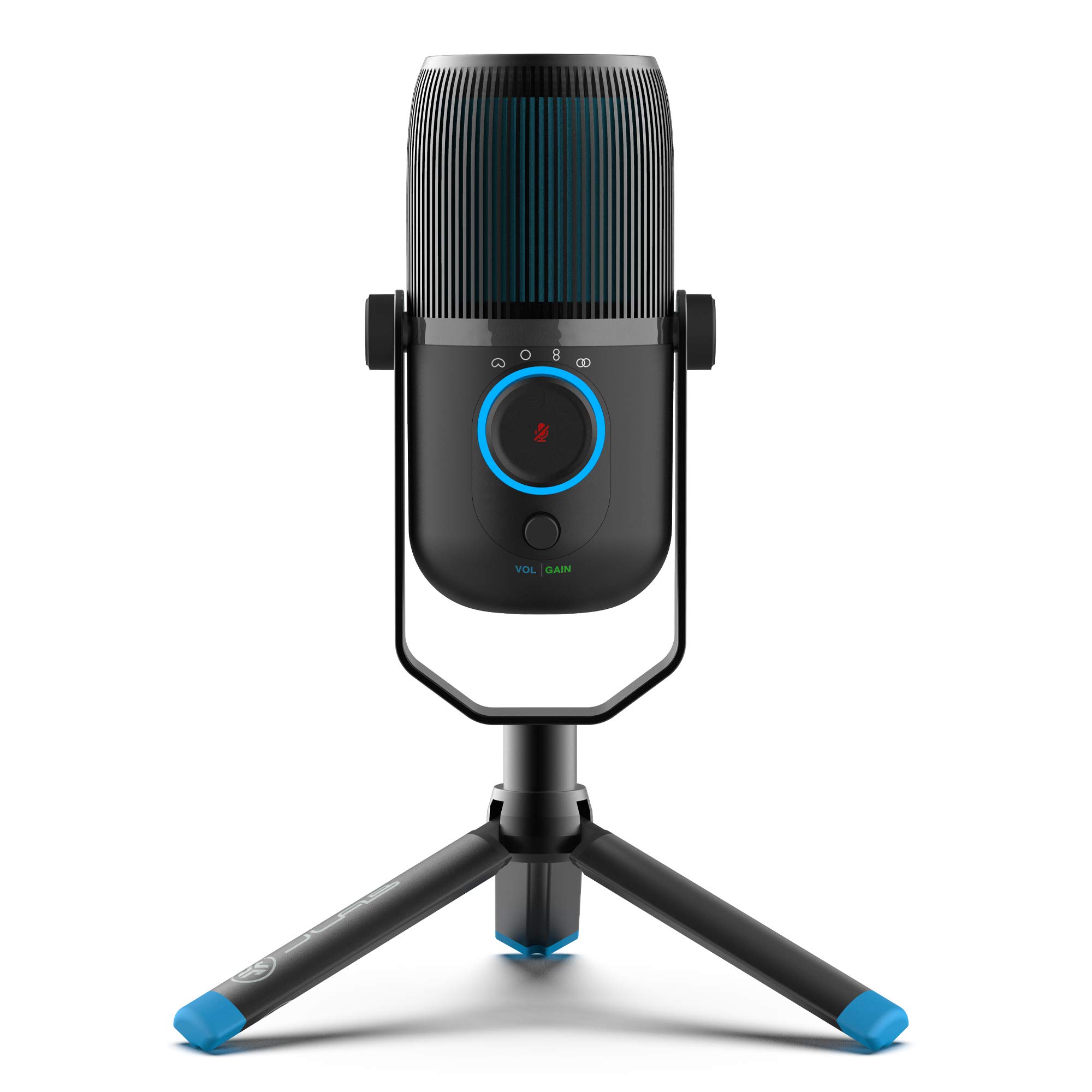
- Four pickup patterns include cardioid, omni, stereo and bidirectional.
- Supports 96kHz/24-bit resolution.
- A 3.5mm AUX input supports zero-latency listening.
Best For: Home and office users who want pickup-pattern options and physical recording controls.
FIFINE K669B
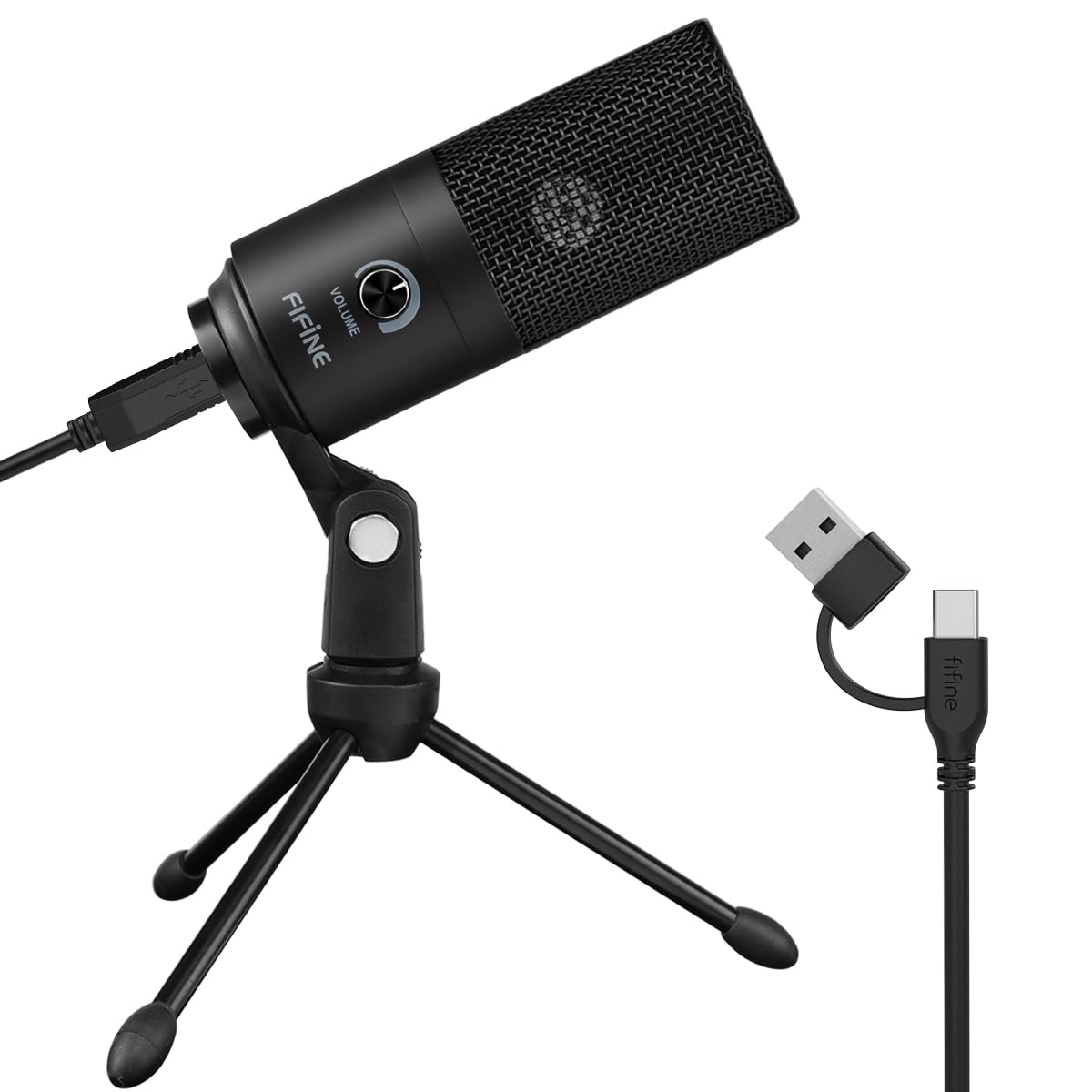
- USB setup includes a 5.9-foot cable.
- Metal construction and a stable tripod stand are included.
- The microphone has a physical volume knob.
Best For: First-time PC or console users seeking a simple USB condenser mic with a tabletop tripod.
Samson Meteor Mic
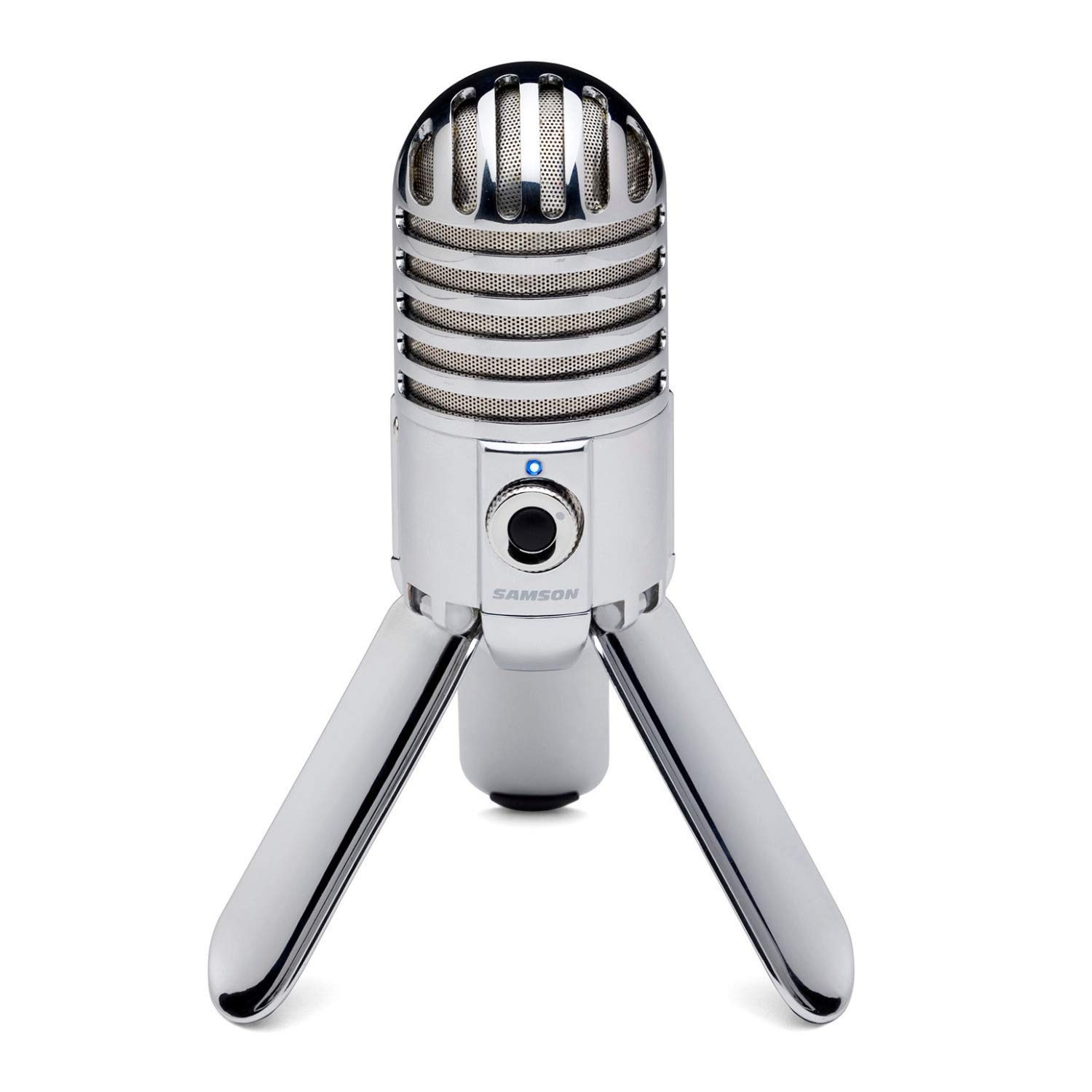
- Fold-back legs provide positioning and fold for transport.
- Includes a 25mm diaphragm USB condenser capsule.
- Headphone output supports zero-latency monitoring.
Best For: Traveling or compact-desk users who want a USB condenser mic with headphone monitoring.
USB Mic with On-Mic Level Monitoring
SteelSeries Alias USB Mic for PC — 3x Bigger Capsule for Gaming, Streaming and Podcasting — Sonar for Streamers Audio Software — AI Noise Cancelling — LED Mute & Level Monitoring — Shock Mount
The SteelSeries Alias is a USB microphone aimed at gaming, broadcasting and podcasting, with a cardioid pickup pattern and a capsule described as up to three times bigger than other mics. Its LED lighting shows audio levels and mute status directly on the mic, while Sonar software provides mixing, app routing and AI noise cancellation.
The integrated shock mount helps reduce unwanted vibration, and the mic works with its included desktop stand or a boom arm sold separately. It suits creators who value software tools and at-a-glance controls, though the software is part of the workflow and a boom arm is an extra purchase.
Best For: Streamers who want on-mic level and mute indicators with included audio software.
| Pros | Cons |
|---|---|
|
|
Choose the Alias if you want a USB streaming mic with visible status indicators and software mixing tools. The integrated shock mount and included desktop stand make it usable at a desk, while an optional boom arm allows another mounting approach.
Check the space and budget for that arm if you prefer suspended placement, and decide whether Sonar’s routing and noise-cancellation tools fit your setup.
USB-C and XLR Broadcast Flexibility
SAMSON Q9U XLR/USB Dynamic Broadcast Microphone
The Samson Q9U is a dynamic broadcast microphone with both USB-C and XLR outputs. Over USB-C, it records directly to Mac or Windows at 24-bit/96kHz without driver downloads; XLR supports integration with a mixer or audio interface.
Its cardioid pattern helps keep the voice forward while limiting ambient pickup, and zero-latency headphone monitoring and an onboard mute switch add useful recording controls. An internal pneumatic shock mount and dual-layer windscreen address mechanical noise and plosives.
It offers a broad connection path, but a desktop stand or boom arm is not identified among the supplied features, so check mounting needs.
Best For: Broadcasters who want USB-C recording now and XLR connectivity for a mixer or interface.
| Pros | Cons |
|---|---|
|
|
Consider the Q9U if you want USB-C convenience alongside an XLR route into a recording setup. Its monitoring, mute switch and internal shock mount suit voice-focused recording and broadcast work.
Before buying, confirm how you will mount it, since a stand or arm is not identified in the available features. Choose a USB-C or XLR signal path based on the equipment you already have.
Four Pickup Patterns for Desktop Recording
JLab Talk Pro USB Microphone, USB-C Output, Cardioid, Omnidirectional, Stereo, Bidirectional, 192k Sample Rate, 20Hz-20kHz Frequency Response, Volume, Gain Control, Quick Mute, Plug & Play
The JLab Talk Pro is a USB-C desktop microphone with four pickup patterns: cardioid, omnidirectional, stereo and bidirectional. That choice supports different recording arrangements, from individual voice work to group calls, podcasts, music and ASMR.
It offers 192kHz/24-bit resolution, plus volume and gain controls and a 3.5mm input for zero-latency monitoring. The included USB/USB-C cable is 10 feet long, and a standard 5/8-inch mount input supports a tripod or other stand.
It gives a desk setup more pattern flexibility than a single-pattern mic, but a separate mount may be needed if you do not use it freestanding.
Best For: Creators who record solo and group audio and want multiple pickup-pattern choices.
| Pros | Cons |
|---|---|
|
|
Pick the Talk Pro if you need one USB microphone for several recording layouts. Cardioid suits a solo voice, while the other patterns provide options for stereo or multiple participants.
Its controls and headphone monitoring are useful during setup, and the 10-foot cable gives placement flexibility. Check what stand or mount you will use, since the listed mount input does not establish that a stand is included.
Software-Tunable Dynamic USB/XLR Mic
MAONO Dynamic Microphone, USB/XLR Podcast PC Microphone with Software, EQ,Tap-to-Mute, Headphone Jack, Gain Knob & Volume Control, Studio Mic for Broadcast, Recording, Streaming & Gaming (PD400X)
The MAONO PD400X is a dynamic USB/XLR microphone designed for studio and home recording, podcasting and live streaming. USB provides plug-and-play use and access to MAONO Link, where Standard Mode selects vocal tone and distance while Advanced Mode adjusts gain, monitor mix, EQ, limiter and compressor.
A three-in-one digital knob controls mic gain, headphone volume and monitor mix, with a touch mute key and LED indicator. XLR connects to professional interfaces, mixers or portable PA systems.
This is a feature-rich option for people who like shaping audio in software, but the more advanced controls depend on the USB connection.
Best For: Podcasters who want app-based sound adjustments and both USB and XLR connections.
| Pros | Cons |
|---|---|
|
|
Choose the PD400X if you expect to adjust the sound in software and want a microphone that also supports XLR. The three-in-one knob, mute control and monitor mix provide practical access to recording settings.
Its main tradeoff is that MAONO Link’s advanced tools depend on USB, while XLR requires an interface or mixer. Check your mounting plan before buying, as a stand or arm is not identified.
Boom-Arm Dynamic Mic with Software Controls
MAONO XLR/USB Dynamic Microphone Kit, RGB Podcast Mic with Software, Mute, Gain Knob, Volume Control, Boom Arm for Streaming, Gaming, Voice-Over, Recording-PD200XS Black
The MAONO PD200XS combines a dynamic microphone with USB and XLR outputs, a boom arm, a mute key and headphone monitoring. Over USB, MAONO Link supports EQ, limiter and compressor adjustments, along with RGB lighting choices; its smart knob adjusts mic gain and headphone volume.
The cardioid pattern focuses on vocals, and the microphone includes a 3.5mm headphone jack for monitoring. USB connects directly to a desktop or laptop, while XLR can connect to an interface, mixer or portable PA.
It is a versatile streaming and podcasting kit, though XLR use needs a separately sourced cable and the software functions are USB-only.
Best For: Streamers seeking USB/XLR flexibility, a bundled boom arm and on-device controls.
| Pros | Cons |
|---|---|
|
|
The PD200XS is a good fit for a streaming desk where a boom arm and quick controls matter. USB brings direct computer connection and software adjustments; XLR adds a path to external audio gear, with a cable purchase required.
Its headphone jack supports monitoring while recording. Before choosing it, consider whether the included arm suits your desk and whether you expect to use the USB-only software tools.
Complete Condenser Recording Arm Kit
FIFINE Studio Condenser USB Microphone Computer PC Microphone Kit with Adjustable Boom Arm Stand Shock Mount for Instruments Voice Overs Recording Podcasting YouTube Vocal Gaming Streaming-T669
The FIFINE T669 is a USB condenser microphone kit built around a table-mounted boom arm. It connects directly to a PC or laptop without extra hardware or drivers, and the cardioid capsule is intended to focus on sound from the front.
The kit includes a steel scissor arm, shock mount, double pop filter and an 8.2-foot USB-B to USB-A/C cable. Its clamp-mounted design can keep the mic off the desk and position it for podcasting or voice-over work.
This complete arrangement is practical for a home recording station, but the product is explicitly incompatible with Xbox and needs a suitable desk edge for its clamp.
Best For: Home podcasters who want a condenser microphone and adjustable arm with core accessories.
| Pros | Cons |
|---|---|
|
|
Choose the T669 if you want a condenser USB mic with a boom arm and recording accessories in one kit. The clamp frees desk surface and the pop filter and shock mount address common recording nuisances.
It fits PC and laptop use, but not Xbox. Before buying, check that your desk edge can take the clamp and that USB-A or USB-C connectivity suits your computer.
Four-Pattern USB-C Desktop Mic
JLab Talk USB Microphone, USB-C Output, Cardioid, Omnidirectional, Stereo or Bidirectional, 96k Sample Rate, 20Hz, 20kHz Frequency Response, Volume, Gain Control, Quick Mute, Plug & Play
The JLab Talk is a desktop USB microphone with four directional patterns: cardioid, omnidirectional, stereo and bidirectional. Those settings suit different tasks such as solo voice-over, music, ASMR and group calls.
Three condenser capsules support its 96kHz/24-bit resolution, while gain and volume controls let you adjust input and listening level. A 3.5mm AUX input enables real-time zero-latency listening, and the 6.5-foot USB/USB-C cable connects without drivers.
It also has a standard 5/8-inch mount input for a swivel mount or stand. This pattern range is useful for changing setups, but users should confirm which stand they plan to use.
Best For: Home and office users who want pickup-pattern options and physical recording controls.
| Pros | Cons |
|---|---|
|
|
The Talk suits users who want one USB mic to handle more than solo voice. Its four patterns and physical gain and volume controls make switching between calls, voice-over and other recording formats straightforward.
The 6.5-foot cable supports desktop placement, and the mount input offers additional positioning options. Confirm whether a stand is included or plan to provide one, since only the mounting input is specified.
Budget USB Mic with Physical Volume Control
FIFINE USB Microphone, Metal Condenser Recording Microphone for MAC OS, Windows, Cardioid Laptop Mic for Recording Vocals, Voice Overs, Streaming, Meeting and YouTube Videos-K669B
The FIFINE K669B is a compact USB condenser microphone with a cardioid pickup pattern, a metal body and a desktop tripod. It connects to a USB-A port on a computer and supports PC, Mac and PlayStation use; the notes exclude Xbox and phones.
A physical volume knob adjusts output, and the USB-powered design does not require 48-volt phantom power. This makes it a straightforward choice for voice chat, meetings, streaming and basic recording without an arm or separate power supply.
Its fixed tabletop arrangement is simpler than an adjustable boom-arm kit, so check whether the included cable reaches your preferred mic position.
Best For: First-time PC or console users seeking a simple USB condenser mic with a tabletop tripod.
| Pros | Cons |
|---|---|
|
|
The K669B is suited to basic desktop voice recording and chat when a tripod is preferable to a boom arm. Its knob gives quick level adjustment, and USB power keeps setup simple.
It works with computers and PlayStation consoles, but not phones or Xbox. Check the cable route and whether a tabletop mic position works for your desk before choosing this fixed-stand style.
Foldable USB Mic for Easy Transport
Samson Meteor Mic USB Condenser Podcasting Podcast Recording Desktop Microphone
The Samson Meteor Mic is a desktop USB condenser microphone with a 25mm diaphragm and fold-back legs that collapse for transport. Its cardioid pattern captures sound from the front while minimizing ambient pickup, and the 20Hz–20kHz frequency response is suited to voice or instrument capture.
A 1/8-inch stereo headphone output with level control supports zero-latency monitoring. The zinc die-cast body has a chrome-plated finish, and the mic supports 16-bit, 44.1/48kHz resolution.
Its foldable design makes storage and travel simpler than a boom-arm kit, though it does not provide the XLR upgrade path offered by some other options.
Best For: Traveling or compact-desk users who want a USB condenser mic with headphone monitoring.
| Pros | Cons |
|---|---|
|
|
Consider the Meteor Mic if you value a self-contained desktop form that folds for travel. Its headphone output and level control make direct monitoring possible, while cardioid pickup suits a single speaker or instrument in front of the mic.
The main tradeoff is connectivity: an XLR route is not specified. Confirm that your recording device has a compatible USB connection or the adapter arrangement needed for iPad use.
How to Choose Usb Microphones
How We Picked USB Microphones
This selection spans simple USB desktop condensers, dynamic mics with USB and XLR connections, multi-pattern models, and kits with boom arms. The useful differences are in recording setup and controls: a basic computer mic can keep calls and voice chat simple, while a multi-pattern desktop mic can suit more than one recording arrangement.
For a home podcast station, an included arm, shock mount or pop filter can reduce extra setup purchases. We favored distinct models and practical use cases over near-identical color variants.
Comparing USB Microphones
The connection type shapes how much setup flexibility you have. Models such as the FIFINE K669B and Samson Meteor Mic use USB for computer recording, while the Samson Q9U, MAONO PD400X and PD200XS also offer XLR for compatible audio gear.
Check that any advanced USB software tools are available over the connection you plan to use; the MAONO PD200XS software features, for example, are USB-only.
| Product | Standout features | Best for |
|---|---|---|
| SteelSeries Alias USB MicCheck Price |
| Streamers who want on-mic level and mute indicators with included audio software. |
| Samson Q9UCheck Price |
| Broadcasters who want USB-C recording now and XLR connectivity for a mixer or interface. |
| JLab Talk ProCheck Price |
| Creators who record solo and group audio and want multiple pickup-pattern choices. |
| MAONO PD400XCheck Price |
| Podcasters who want app-based sound adjustments and both USB and XLR connections. |
| MAONO PD200XSCheck Price |
| Streamers seeking USB/XLR flexibility, a bundled boom arm and on-device controls. |
| FIFINE T669Check Price |
| Home podcasters who want a condenser microphone and adjustable arm with core accessories. |
| JLab TalkCheck Price |
| Home and office users who want pickup-pattern options and physical recording controls. |
| FIFINE K669BCheck Price |
| First-time PC or console users seeking a simple USB condenser mic with a tabletop tripod. |
| Samson Meteor MicCheck Price |
| Traveling or compact-desk users who want a USB condenser mic with headphone monitoring. |
Choosing a USB Mic for Your Recording Space
A tabletop tripod keeps setup compact, as on the FIFINE K669B, while a clamp-mounted arm like the FIFINE T669 moves the mic off the desk and closer to the speaker. Check desk thickness and available edge space for a clamp, then consider cable reach and where the computer sits.
A foldable desktop design such as the Samson Meteor Mic makes storage and transport simpler when a permanent arm is not practical.
Pickup Patterns, Monitoring and Controls
A cardioid USB microphone focuses on a speaker positioned in front, which fits solo voice chat and podcasting. Four-pattern models such as the JLab Talk and Talk Pro add omni, stereo and bidirectional choices for group or alternate recording arrangements.
Physical gain, volume and mute controls help make quick changes without opening software. A headphone output or jack supports direct monitoring; check whether the selected model offers zero-latency monitoring if that matters to your recording workflow.
Who Should Buy Which USB Microphone?
For straightforward computer recording, consider a desktop USB model with a tripod and physical volume control. For a home podcast desk, a kit with a boom arm, shock mount and pop filter can provide more positioning options in one purchase.
Streamers may prefer visible mute and level indicators, while creators who expect to add a mixer or interface should look for USB/XLR connectivity and account for any cable or stand sold separately.